
Travel news in 2026 is dominated by seismic shifts across airlines, hospitality, technology, and global demand, reflecting how the travel industry continues to rebound and innovate after the pandemic. From record passenger volumes and expanded airline routes to the rise of generative AI transforming travel planning and distribution models, this year’s travel news reveals an industry redefining itself for the future.
In this comprehensive article, we’ll dive into the latest travel industry trends, emerging business strategies, and macroeconomic influences shaping global tourism. You’ll discover key developments in corporate travel spend, airline expansion, cruise sector investments, and how technological adoption, especially AI and connected retailing, is streamlining operations and personalizing travel experiences. We’ll break down these trends with real data, expert insights, and actionable takeaways to help industry professionals, analysts, and travel stakeholders stay ahead in 2026. Naturally, we incorporate Travel news insights throughout to keep this article both informative and timely.
Global Passenger Travel Surges in 2026
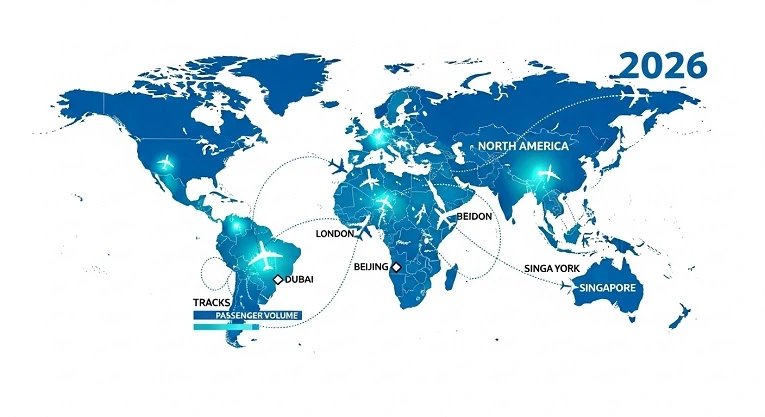
Travel news sources are highlighting unprecedented passenger movement in 2026. In China, for example, authorities projected a record 9.5 billion passenger trips during the extended Lunar New Year holiday period, surpassing previous travel volumes and placing heavy demand on transport infrastructure. Rail and air segments are both expected to break records, with hundreds of millions of trips during the extended peak season.
Globally, airlines also reported strong travel demand over the previous Christmas and New Year period, with 309 million passengers flying between December 15, 2025, and January 4, 2026, up 4% from the prior year. Major hubs like Dubai and Atlanta saw high traffic, underscoring continued airline network resilience despite operational challenges.
Record Travel During Peak Seasons
Peak season travel volumes serve as a barometer of industry health. The surge in passenger counts during Lunar New Year and the winter holidays reflects pent-up demand and improved connectivity across regions. Airlines and rail operators increased capacity to accommodate travelers, while governments extended holidays in some markets to stimulate tourism and domestic consumption.
Regional Growth Patterns
While Asia, especially China, is reporting overwhelming demand, regions like Europe and the Middle East continue to be major tourism hubs. The UK and Gulf nations remain significant in international arrival statistics, showing that international mobility is recovering alongside domestic travel rebounds.
AI and Automation: Redefining the Travel Industry
One of the biggest travel news themes in 2026 is the integration of artificial intelligence (AI) across planning, distribution, and customer experience. Travel companies, from agencies to airlines, are deploying AI to improve efficiency, personalize services, and reduce operational friction.
Generative AI in Planning and Bookings
According to travel trend analysis, AI has evolved from a futuristic concept into a mainstream planning tool. Thousands of travelers now rely on generative AI to research and book travel, while corporate travel managers use AI to predict disruptions and automate itinerary changes in real time.
This adoption helps companies and consumers alike reduce human workload and respond to rising expectations for speed and personalization. Companies like Expedia and Booking.com are embedding AI features for travelers, and predictive analytics is becoming a core strategy for corporate travel management.
Connected Retailing and Content Aggregation
The travel retailing landscape is transforming fragmented content chaos into unified retail platforms. Industry technology providers are consolidating travel offers, air, hotel, and ancillary services into AI-powered marketplaces. This shift improves efficiency for travel agents and enhances offer personalization for customers.
This connected retailing trend removes the traditional divide between direct and indirect distribution, optimizing data flow and real-time pricing for global travel inventory.
New Airline Routes and Network Expansion
Travel news in 2026 also highlights strategic airline expansions, such as Virgin Australia launching international flights out of Canberra directly to Bali, an unprecedented route that adds tens of thousands of seats annually.
These expansions reflect strong international travel demand and carrier confidence in route profitability. Broader airline network growth includes more long-haul narrow-body services and expanded connectivity between emerging markets.
Hospitality Sector Growth and Trade Partnerships
Industry leaders are signaling optimism for the hotel sector. For example, executives from major hotel groups pointed to the India-EU trade pact as a catalyst for increased travel and hotel demand, emphasizing India as one of their fastest-growing markets. This kind of international trade cooperation helps stimulate inbound and outbound tourism.
Growth in this segment is reinforced by multi-market travel trends and rising middle-class mobility in Asia and Africa.
Corporate Travel Outlook for 2026
Corporate travel is on a recovery trajectory after pandemic austerity. Reports indicate a projected rise in corporate travel budgets and hotel bookings in 2026, with companies feeling more confident about resuming face-to-face engagements and business events.
Despite cost-cutting pressures in some sectors, data shows demand for business travel and events is expected to boost airline and hotel revenues.
Cruise Industry Expansion and Investment
Cruise line operators are making significant capital investments. For instance, MSC Group opened a new $100 million North American cruise headquarters in Miami, signaling confidence in continued sector growth and operational expansion in the region.
These investments reflect strategic positioning to capture greater market share in luxury cruising and maritime operations.
Technology Trends: Mobility, Connectivity, and Seamless Experience
Connectivity and mobility continue to shape traveler expectations. Enhanced digital tools, from robust in-flight Wi-Fi to mobile check-ins and integrated itinerary services, are becoming industry standards, balancing the need for connectivity with options for digital detox and curated wellness experiences.
This reflects a dual-direction trend: travelers value constant access to information while also seeking meaningful disconnection during trips.
NDC and Distribution Transformation
New Distribution Capability (NDC) is transitioning from experimental to industry standard in 2026. This airline retailing protocol enables richer offer distribution and more tailored pricing models for customers and agencies alike.
With NDC integrated into mainstream sales channels, travel retailers can offer more personalized, data-driven travel options without complex workarounds.
Destination Trends and Cultural Drivers
Travel news today also highlights cultural and niche travel drivers. For example, dark skies tourism around astronomy events and the rising popularity of lesser-known destinations like Scotland’s Galloway region underscore travelers’ desire for experience-led journeys.
Likewise, “pop culting”, travel inspired by media franchises and cultural IP, is driving niche demand from fans and enthusiasts.
Sustainability and Responsible Travel in Business Models
Sustainable travel is now embedded within industry planning, with more companies adopting responsible tourism practices. These efforts aim to balance economic growth with environmental stewardship, community engagement, and cultural preservation.
FAQs: Travel News Industry Trends
1. What is the most important travel industry trend in 2026?
AI integration across planning, customer experience, and retailing is the defining trend, enabling automation, personalization, and real-time decision-making.
2. How are airline networks changing in 2026?
Airlines are expanding routes, including new direct international services and wider long-haul narrow-body networks, to meet rising traveler demand.
3. Why is NDC important for the travel industry?
NDC enables more personalized, data-rich offer distribution and pricing, improving customer experience and agency workflow efficiency.
4. What role does sustainability play in current travel news?
Sustainability is central to investment strategies, product offerings, and destination management as travelers and companies prioritize long-term impact.
5. How is corporate travel recovering in 2026?
Corporate travel budgets and bookings are rising, with companies increasingly optimistic about travel growth and business events.
With so much change happening industry-wide, working with a specialist rather than a generic booking site can make a real difference. See our comparison of travel agent vs booking online to decide what suits your next trip.
What These Trends Mean for UK Travellers in Practice
Stripped of the industry language, most of these trends point the same way for ordinary travellers: popular travel is getting booked up earlier. Record passenger volumes, expanded but still finite airline capacity and hotels that can reprice by the day all mean that the best routes, the sensible flight times and the well-located rooms for school holidays and peak weekends are often committed months ahead. Leaving a popular trip late no longer reliably produces a bargain; more often it produces a choice between the expensive option and the awkward one.
The second lesson is to check the rules before you pay, not after. Entry requirements for UK travellers are in a period of change, and a booking made on the assumption that a passport alone will do can unravel if a new authorisation or a stricter passport validity rule has appeared since you last travelled. Our plain-English guide to ETIAS for UK citizens, and what is actually true right now, is the place to check the European picture, and it is equally worth understanding what your travel insurance covers, and what it quietly excludes, before you commit to anything non-refundable. Finally, value flexibility more than you used to: fares and rates that can be changed or cancelled are worth a modest premium in a year when schedules, rules and prices are all still moving.

Frequently Asked Questions
Will travel get cheaper or more expensive in 2026?
Honestly, it depends on the trip, and anyone who promises a definite answer is guessing. Strong demand and limited capacity on popular routes push prices up, while new routes and competition push them down on the specific routes where airlines are expanding. In practice, most UK travellers will find peak-season travel to popular destinations no cheaper than last year, with the best prices going to people who book early, travel at quieter times or stay flexible about dates and airports.
What entry rules are changing for UK travellers?
Under current EU plans, two systems affect trips from the UK to Europe: the Entry/Exit System (EES), which replaces manual passport stamping with a digital record, and ETIAS, a pre-travel authorisation for visa-free visitors to most EU countries. Timings and final details have moved before and may move again, so treat anything you read, including here, as a prompt to check the official position for your destination before you book and again before you travel, rather than as a fixed date to rely on.
Should I book 2026 travel earlier than usual?
For popular routes, school-holiday dates and specific hotels, yes. Booking earlier in 2026 is mainly about securing choice, the flight times, seats together, room type and resort you actually want, rather than guaranteeing the lowest possible price. If your plans are flexible, your destination is quiet or you are travelling outside peak periods, there is less urgency, and waiting for a sale can still pay off.
Where can I check official travel rule changes?
Start with GOV.UK foreign travel advice, which carries a page for every destination with its current entry requirements, and check the official EU sources for EES and ETIAS rather than relying on news stories or social media posts about them. Check once when you book, to be sure you can meet the rules, and again in the week before you travel, in case anything has changed in between.