

Quick Answer
The best time to visit Italy from the UK is late April to early June, or mid-September to late October. Those windows bring daytime highs in the low to mid twenties and crowds you can move through. May, June and September suit a first trip best. January is cheapest, and the coast is best in June and September, when the sea is warm without the August crush. July and August are the hottest, busiest and most expensive months.
Spring in Italy: March to May
Spring is the strongest all-round season for a first visit. Daytime highs in Rome and Florence typically run from about 17 to 24 degrees between March and May, and wildflowers appear across Tuscany and Umbria. Late April and May are the prime weeks, before the summer crowds arrive. March is cooler, quieter and good value.
Two dates need planning around. Easter week is a major domestic peak, especially in Rome, where Holy Week draws large crowds, and the days around the 25 April public holiday can also be busy. Book the big sights in advance for May, because timed tickets for the Colosseum, the Uffizi and the Vatican Museums sell out. Our guide to the best time to visit Spain follows the same pattern.
Summer in Italy: June to August
June is the most bearable summer month almost everywhere. Days are long, the sea is warming up, and the worst heat is still a few weeks away. July and August are a different story inland. Daytime highs commonly reach 29 to 35 degrees, and Florence averages a daily high of about 32.6 degrees in August, with no sea breeze to soften it. Sightseeing at midday becomes hard work.
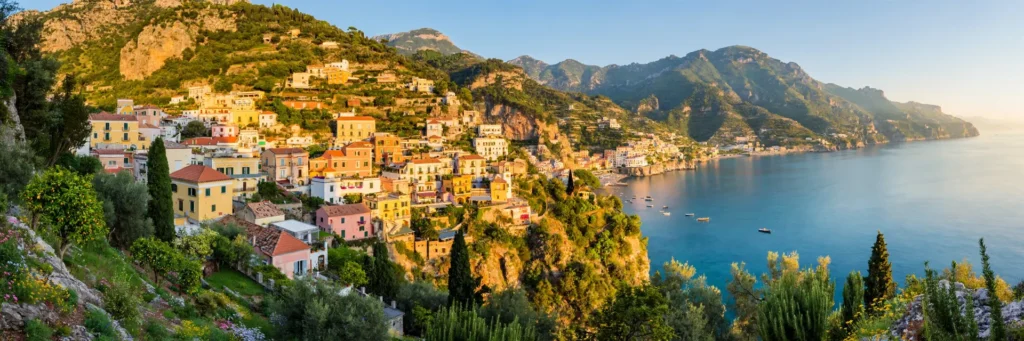
The coast tells the opposite story. Late June through August is when the sea is warm enough to swim across most of the coastline, and ferries run at their fullest timetables. The Amalfi Coast, Cinque Terre, Sardinia and Sicily are at their best for a beach-first trip, but also at their most expensive and most crowded. Around Ferragosto on 15 August, many Italians take their own holidays, so coastal towns fill up. The same timing logic applies further east, as our guide to the best time to visit Croatia shows.
Autumn in Italy: September to November
September is many regular visitors’ favourite month. The sea is still warm from summer, so swimming is possible through most of the month, the light turns golden, and the peak crowds start to thin. Daytime highs run from about 18 to 29 degrees in September. October brings the grape and olive harvests and truffle season.
November is the quietest autumn month and one of the cheapest times to visit the art cities. Days are shorter, rain is more likely, and coastal towns wind down. That matters less in Rome, Florence and Venice, where museums and city life run all year.
Winter in Italy: December to February
Winter is the bargain season for the cities and the peak season for the mountains, so the right month depends on which Italy you want. Rome’s daytime highs sit around 13 to 14 degrees in winter, mild next to a British January, and the big museums are quietest from early January. The week between Christmas and New Year is the one exception, when prices and crowds jump.
In the Alps, the season runs from December to March, with late January to February usually delivering the most reliable snow in the Dolomites. For a budget city break, target mid-January to February, when flights and hotels sit at their yearly lows.
Best Time to Visit Italy by Region
Italy is about 1,200 kilometres long, running from an Alpine climate in the north to a near North African one in the south, so one month can feel very different from one end of the country to the other. Rome, Florence and Venice follow the shoulder-season rule most closely: April to May and September to October are best, and November to February is the value window. The Amalfi Coast and the islands are best in June or September, Sicily and Puglia stay warm longest, and the Dolomites suit walking in summer and skiing in winter.
Venice deserves one extra check. Its day-tripper access fee ran on 60 set days in 2026, at 5 euros if paid at least four days ahead and 10 euros after that, and the 2026 trial ended on 26 July, with no fee for the rest of 2026. Overnight guests and children under 14 were exempt. Check the City of Venice portal before a 2027 trip, because the scheme may return. Island timing matches the Greek islands, which our guide to the best time to visit the Greek Islands breaks down island by island.
Crowds and Prices: When Italy Costs Most and Least
Prices follow the crowds closely. July and August are the most expensive weeks of the year, especially on the Amalfi Coast, in Venice, on Lake Como and in Sardinia, where accommodation rates spike. Shoulder-season hotel rates commonly run 15 to 25 percent below peak. January is the single cheapest month for both flights and hotels, with mid-November and early December close behind. The exception is the Christmas and New Year week, which behaves like peak season. Crowds are heaviest in Rome, Florence and Venice from late April through June and again in September. In July and August the crowds shift to the coast. Our guide to the best time to book flights from the UK explains how far ahead to book.
UK Practicalities: Flights, School Holidays and Entry Rules
Italy is an easy short-haul trip. A direct flight from London to Rome takes about 2 hours 35 to 2 hours 40 minutes, and Milan is around two hours. Rome is one hour ahead of the UK. Direct flights run year-round from London, Manchester, Edinburgh and other UK airports. School holidays shape prices more than weather does. The May half term, usually in the last week of May, and the October half term, usually in the last week of October, both push prices up, as does the summer break from late July into early September.
Entry rules are straightforward but worth checking before you book. GOV.UK says UK passport holders can visit Italy without a visa for up to 90 days in any 180-day period, counting days spent in any Schengen country towards the same limit. Your passport must have been issued less than 10 years before arrival and be valid for at least three months after the day you plan to leave the Schengen area. The EU Entry/Exit System is being rolled out at Schengen borders, and ETIAS is not yet in operation, with a 20 euro fee expected once it starts. Do not pay any website selling ETIAS now. Our ETIAS guide for UK citizens tracks the current position.
Who Each Season Suits Best
First-time visitors covering Rome, Florence and Venice should pick late April to mid-June or mid-September to late October, when the weather is comfortable and everything is open. Couples will get the most from May or September. Families tied to school holidays should aim for June or early September rather than August, and book as early as possible. Budget travellers should look at November, January or February, outside the Christmas week. October suits walkers and food lovers, December to March suits skiers, and June or September suits beach lovers.
Frequently Asked Questions
What is the best month to visit Italy?
May is the best single month for a first trip, with warm weather, long days and everything open, followed closely by June and September. September has the edge if you want to swim, because the sea is still warm.
Is Italy too hot in July and August?
In the cities, often yes. Rome and Florence commonly reach the low to mid thirties, and Florence averages a daily high of about 32.6 degrees in August. The coast is more comfortable, but also the most crowded and expensive time to visit.
What is the cheapest time to visit Italy?
January is the cheapest month, with mid-November and February close behind, for both flights and hotels in the cities. Avoid the Christmas and New Year week, when prices jump. Shoulder-season hotel rates commonly run 15 to 25 percent below peak.
Do UK citizens need a visa or ETIAS for Italy?
No visa is needed for tourist stays of up to 90 days in any 180-day period. Your passport must have been issued less than 10 years before arrival and be valid for at least three months after you leave the Schengen area. ETIAS is not yet in operation, so any site selling it is not genuine.
When is the sea warm enough to swim in Italy?
The sea is warm enough to swim from late June through September, and often into October in Sicily and Puglia. June and September are the best months for a beach trip, because the beaches are far less crowded than in July and August.