

Quick Answer
For most family holidays of three nights or more, self-catering wins. You get separate bedrooms, a kitchen and a washing machine for one price per property, and the food savings alone can cover the stay. Hotels win for short breaks of one or two nights, for city trips where you eat out anyway, and for parents who want a proper break from cooking and cleaning. The deciding question is simple: what happens when your children go to bed at 7pm? In a hotel room, that is your bedtime too. In a cottage, you close their bedroom door and keep your evening.
What the Two Options Actually Cost
A hotel charges per room, while self-catering charges per property, and that single difference shapes the whole comparison. A family of four usually needs a family room, and a family of five or six often needs two rooms. A cottage sleeping six costs the same however many of you stay, so the bigger your family, the further self-catering pulls ahead. MoneySavingExpert found a three-bedroom cottage in Sicily for £294 a week in July 2025, while three hotel rooms nearby cost £1,296 a week. In the UK, a three-bedroom cottage in Windermere cost £585 a week in late August, against £2,520 a week for three hotel rooms for six people.
For a family of four the gap is smaller. Which? reported that the average nightly rate for an Airbnb or Vrbo stay in Cornwall during February half term 2023 was £203, while the average room rate in a three or four-star hotel that same week was £107, according to Kayak.
Prices swing hard with the seasons on both sides. A two-bedroom cottage that costs £400 to £700 a week in low season can cost £900 to £1,600 a week in peak summer, and school holiday weeks carry the steepest premium of all. Hotels discount midweek and last minute far more often, so travelling outside school holidays shrinks the gap.
Space and Bedtime: Where the Real Difference Shows
Ask any parent who has tried it and they will tell you the same thing: the hardest part of a hotel stay with small children is not the price, it is the evening. A family room gives you one space for sleeping, playing, eating and relaxing. Once the children are asleep, you sit in the dark, whispering, or you hide in the bathroom with your phone.
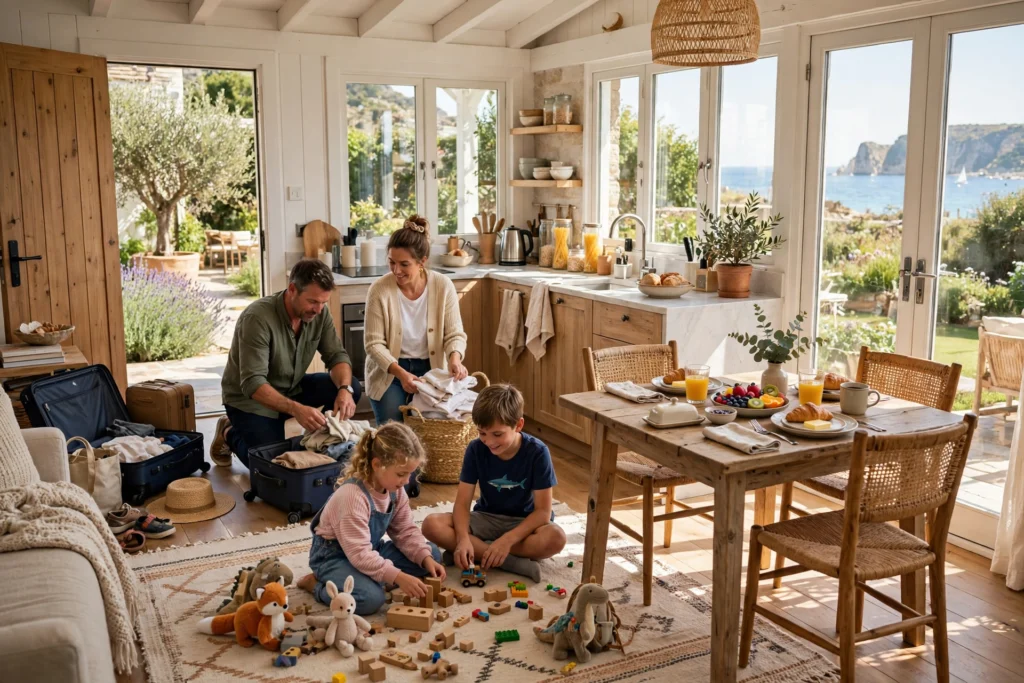
Self-catering gives you separate bedrooms and a living room, and that changes the whole holiday. You put the children to bed at their normal time, close the door, and sit down with a glass of wine and a film. There is space for a travel cot, a buggy and wet towels without anyone tripping over them. The trade-off is that nobody makes the beds or changes the towels, and you load the dishwasher and take out the rubbish yourself. Some families find that a fair swap. Others say they are on holiday and do not want chores at all.
Food: Kitchens, Fussy Eaters and the Restaurant Bill
Food is where self-catering saves the most money, and it is also where it asks the most of you. A family of four eating every meal in hotel restaurants and cafes can easily spend £80 to £120 a day, which adds up to £560 to £840 over a week. A supermarket shop for the same week costs around £120 to £180.
A kitchen also solves the fussy eater problem. You can cook plain pasta at 5pm, pack sandwiches for a day out, and keep milk, snacks and medicine in a fridge that is yours. Weaning babies need food prepared three times a day, which is far easier with a hob and a high chair than a hotel restaurant. Hotels answer with convenience: breakfast is cooked for you, dinner is a walk downstairs, and nobody has to shop, cook or wash up. A good middle ground is self-catering with two or three meals out during the week, so you keep the savings without the holiday feeling like a week of housework.
Facilities, Help and the Little Things
Hotels come with people and services. There is a reception desk, a restaurant, and often a pool and a bar on site. Many family hotels run kids clubs with organised activities, which can give parents a real break for an hour or two. Some charge extra, so check times and prices before you book.
Self-catering gives you a different set of tools. A washing machine is the one that parents mention most, and it matters more than it sounds: on a week with small children, a machine turns a pile of muddy clothes into a normal evening task instead of a packing problem. Pools need checking on both sides: a hotel pool can be crowded with timed slots, while a cottage pool may be shared, unheated or charged per session. Cots and high chairs are often free but limited, so request them when you book.
Flexibility: Short Breaks, School Holidays and Booking Rules
Hotels are built for short stays. You can book one night and cancel with a day or two of notice on many rates. Self-catering is stricter. Many cottages ask for a minimum stay of three nights, and in peak summer some still ask for a full week from Saturday to Saturday. For a weekend, a hotel is usually easier and often cheaper once you add the cottage cleaning fee.
School holidays shape both options. In most of England, the 2027 breaks fall in February half term from 15 to 19 February, Easter from 26 March to 9 April, May half term from 31 May to 4 June, summer from about 22 July, and October half term from 25 to 29 October. Payment terms differ too: cottage bookings usually take a deposit of 25 to 30 percent when you book, with the balance due six to eight weeks before arrival, while hotels often allow free cancellation until a day or two before arrival. If your plans might change, that flexibility is worth real money.
Which One Suits Your Family?
There is no single right answer, because families travel in different shapes. A couple with a baby on a three-night stay will get more from a cottage with separate bedrooms and a kitchen. A family with teenagers on a two-night city break will get more from a hotel near the sights, where nobody cooks and everyone can come and go. A family of six on a week by the coast will almost always save money in a cottage.
Think about the age of your children first. Babies and toddlers need routine, naps, early bedtimes and a kitchen, which all point to self-catering. School-age children want a pool, a kids club and other children to play with, which points to a hotel or a holiday park. Teenagers want space, Wi-Fi and a door they can close, which points back to self-catering. Our guide to the best family holidays in the UK matches destinations to your children’s ages, which helps whichever stay you pick. Three nights or more in the countryside or by the coast favours self-catering; one or two nights in a city favours a hotel. Our villa vs hotel comparison covers the same trade-offs abroad, and our hotel vs B&B guide compares a hotel with a guesthouse for a UK break.
Frequently Asked Questions
Is self-catering cheaper than a hotel for a family holiday?
Usually, yes, once you stay three nights or more or need more than one room. A cottage charges one price for the whole property, while a hotel charges per room, and cooking some meals saves several hundred pounds over a week. For one or two nights, a hotel can work out cheaper.
What age are children best suited to self-catering?
Babies and toddlers benefit most, because you get separate bedrooms, a kitchen and a washing machine, and you can keep their routine. School-age children often prefer a hotel or holiday park with a pool and a kids club.
Do self-catering cottages charge a cleaning fee?
Many do, and it is often added on top of the nightly rate, so check the total before you compare prices with a hotel. You are still expected to leave the property tidy and wash up.
Can you book self-catering for just a weekend?
Yes, outside peak season most cottages accept two or three-night stays, though some set a three-night minimum. In July and August, many cottages still ask for a full week from Saturday to Saturday.
What should I check before booking a family cottage?
Check the total price including cleaning fees, the cancellation terms, and the deposit and balance dates. Ask about cots, enclosed gardens, parking, and whether the pool is heated and included.