

Quick Answer
Two days is enough for the Edinburgh essentials, and three days is the sweet spot for a first visit. One day covers the Castle, the Royal Mile and one viewpoint, but it is a long, fast day on foot. Two days add Leith and Arthur’s Seat. Three days bring in the New Town and a slower pace. Four days let you add a day trip.
One Day in Edinburgh: The Old Town Highlights
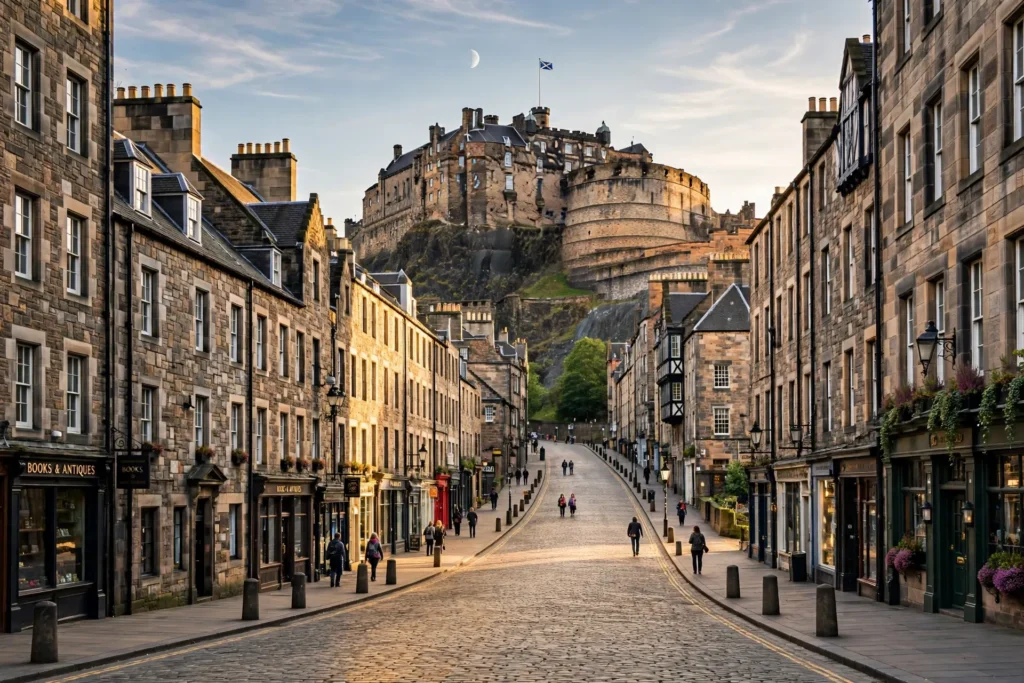
Start at Edinburgh Castle when it opens at 9.30am. Book a timed ticket online in advance, because an adult ticket costs £23.50 online against £26 at the gate, and once the online tickets for a day sell out, none are sold at the castle. Allow two to three hours inside for the Honours of Scotland and the views from the ramparts, and be at the Argyle Battery before 1pm for the One O’Clock Gun, which is not fired on Sundays. From April to September the castle closes at 6pm, and from October to March at 5pm. It is closed on 25 and 26 December.
From the castle, walk downhill along the Royal Mile, the cobbled spine of the Old Town that runs about 1.8 kilometres to the Palace of Holyroodhouse. The walk is free and takes under an hour without stops, but the closes and shops will slow you down. Note that St Giles’ Cathedral has charged £12 for entry since October 2026. At the foot of the Mile, the Palace of Holyroodhouse costs £22 booked in advance or £26 on the day. Check the day before you go, because the palace is shut on Tuesdays and Wednesdays from 17 September to 20 May. Finish the day at Calton Hill for the sunset view, or book an evening underground vaults tour.
Two Days in Edinburgh: Add Leith and Arthur’s Seat
Day two gets you out of the Old Town. Start at the Royal Yacht Britannia in Leith, about two miles from the city centre and around 20 minutes by tram. An adult ticket costs £23 online or £25 at the door from April to October, and £22 or £24 from November to March. Allow about two hours for the self-guided audio tour across five decks. The yacht is closed only on 25 December and 1 January. Leith’s waterfront pubs are a short walk from Ocean Terminal.
In the afternoon, climb Arthur’s Seat, the extinct volcano in Holyrood Park. It is free, and the round trip takes one and a half to two and a half hours depending on your route and pace. Go late in the afternoon on a clear day, and wear proper shoes, because the paths are steep and rocky. If the weather turns, swap the climb for the National Museum of Scotland on Chambers Street, which is free and enormous, with a rooftop terrace that gives you a similar view without the climb. Two days is the minimum for a first visit that feels like a holiday rather than a checklist. Book transport early, because the same logic in our guide to the best time to book flights applies to trains too: the cheapest fares go first.
Three Days in Edinburgh: The New Town and a Slower Pace
Day three crosses to the other side of Princes Street, and the change of mood is the point. The New Town is Georgian symmetry after two days of medieval closes. Start in Dean Village, about fifteen minutes on foot from the west end of Princes Street, then follow the Water of Leith Walkway to Stockbridge, a pretty twenty minute walk.
From Stockbridge, the Royal Botanic Garden is a ten minute walk and free to enter, although the Palm Houses cost £5.50 and need a timed ticket. In the afternoon, visit the Scottish National Gallery on The Mound, which is also free, then walk down to Princes Street Gardens for a look back at the castle. Three days also leave room for a whisky tasting and a first try of haggis. If Edinburgh is one stop on a longer Scotland trip, our guide to the best places to visit in Scotland shows how the city fits alongside the Highlands, the islands and the smaller towns.
Four Days in Edinburgh: Day Trips from the City
By day four you have seen the city properly, and Edinburgh’s real advantage is what sits within reach of it. Stirling and Glasgow are both under an hour by train from Waverley, so either works as an easy day out. Stirling Castle and the Wallace Monument make a strong history day, while Glasgow offers museums, music and food. A fourth day also suits Rosslyn Chapel, which needs a booked 90-minute slot, or North Berwick.
If you would rather see the Highlands, day four is the one to spend on a full-day tour to Loch Ness and Glencoe, the most popular day trip from the city. These tours run long, usually twelve hours or more, so treat the evening as a rest night. Four days in August need extra planning, because the Edinburgh Festival Fringe ran from 7 to 31 August in 2026, with more than 4,200 shows, and accommodation prices rise sharply while rooms sell out months ahead.
How Long Each Main Attraction Takes
Use these times to build your own plan. They are the figures the operators and the main Edinburgh guides agree on.
| Attraction | Time needed | Adult price |
|---|---|---|
| Edinburgh Castle | 2 to 3 hours | £23.50 online, £26 at the gate |
| Royal Mile walk | 1 to 2 hours | Free |
| Palace of Holyroodhouse | 2 hours | £22 in advance, £26 on the day |
| Royal Yacht Britannia | 2 hours | £23 online, £25 at the door (Apr to Oct) |
| Arthur’s Seat climb | 1.5 to 2.5 hours | Free |
| National Museum of Scotland | 2 to 3 hours | Free |
| Scottish National Gallery | 1 to 2 hours | Free |
| Royal Botanic Garden | 2 hours | Free (Palm Houses £5.50) |
If the castle, the palace and Britannia are all on your list, compare the Royal Edinburgh Ticket before you book. It bundles all three plus 48 hours on the hop-on hop-off bus for £81 per adult.
What to Book Before You Go
Book Edinburgh Castle first. It is the one attraction that genuinely sells out, and there is no workaround once the online tickets for your day are gone. Book the Palace of Holyroodhouse next, especially if your visit falls on a Tuesday or Wednesday outside the summer season, when it is closed. Britannia rarely sells out, but booking online still saves £2 per adult. If you are travelling in August, book accommodation months ahead, because the average Fringe ticket cost £13 in 2026, with 440 free shows alongside the paid programme. If friends or family are joining you from outside the UK and Ireland, our ETIAS guide for UK citizens explains what is changing for travel to Europe.
Practical Tips for Every Trip Length
Stay in or near the Old Town for a one or two day trip. Since 24 July 2026, Edinburgh has charged a visitor levy of 5 percent of the room cost, for a maximum of five consecutive nights, on hotels, hostels, B and Bs and short-term lets, so add it to your budget. Edinburgh gets rain on roughly 130 days a year, so pack a waterproof layer whatever the season, and expect cobbles to be slippery when wet. The tram and Lothian buses cover Leith and the airport, with an adult bus single costing £2. December suits a short Edinburgh trip if you like Christmas markets and Hogmanay. Our guide to the best places to visit in December covers Edinburgh alongside other winter destinations, and the November guide suits travel just before the festive season.
Frequently Asked Questions
Is one day enough for Edinburgh?
One day covers the highlights, the castle, the Royal Mile and one viewpoint, but you will miss Leith, the New Town and the museums. Book the castle for the 9.30am opening slot and walk downhill from there, so you never double back.
How many days do you need in Edinburgh for a first visit?
Three days. Day one covers the castle and the Royal Mile, day two adds Britannia and Arthur’s Seat, and day three covers the New Town and a whisky tasting.
What should I book in advance in Edinburgh?
Book Edinburgh Castle first, because it sells out and no tickets are sold at the gate once the online allocation is gone. Book the Palace of Holyroodhouse next, and book accommodation months ahead if you are visiting during the Fringe in August.
Is Edinburgh walkable?
Yes. Most first-time visitors cover the main sights on foot, but the Old Town is hilly and cobbled, so wear comfortable shoes. Use the tram or bus for Leith, about two miles from the centre, and for the airport.
When is the best time to visit Edinburgh?
May, June and September offer the best balance of daylight, mild weather and smaller crowds. August is the most exciting, but also the busiest and most expensive. December suits Christmas markets and Hogmanay.