
Dubrovnik is a small city, but where you stay changes the trip more than in most European destinations. The Old Town is compact and car free, the hills are steep, and the beaches sit a bus ride away in Lapad. Pick the wrong base and you will spend your holiday climbing stairs with luggage or waiting for buses. Pick the right one and the city feels easy from the first morning.
Quick Answer
For a first visit focused on sightseeing, stay in the Old Town, Pile, or Ploce. The Old Town gives you the most atmosphere, Pile gives you almost the same location with easier arrivals, and Ploce gives you sea views and a short walk to the walls. For beaches, families, and a longer stay, choose Lapad or Babin Kuk. For the best value and easy ferry access, choose Gruz.
Old Town: Inside the Walls
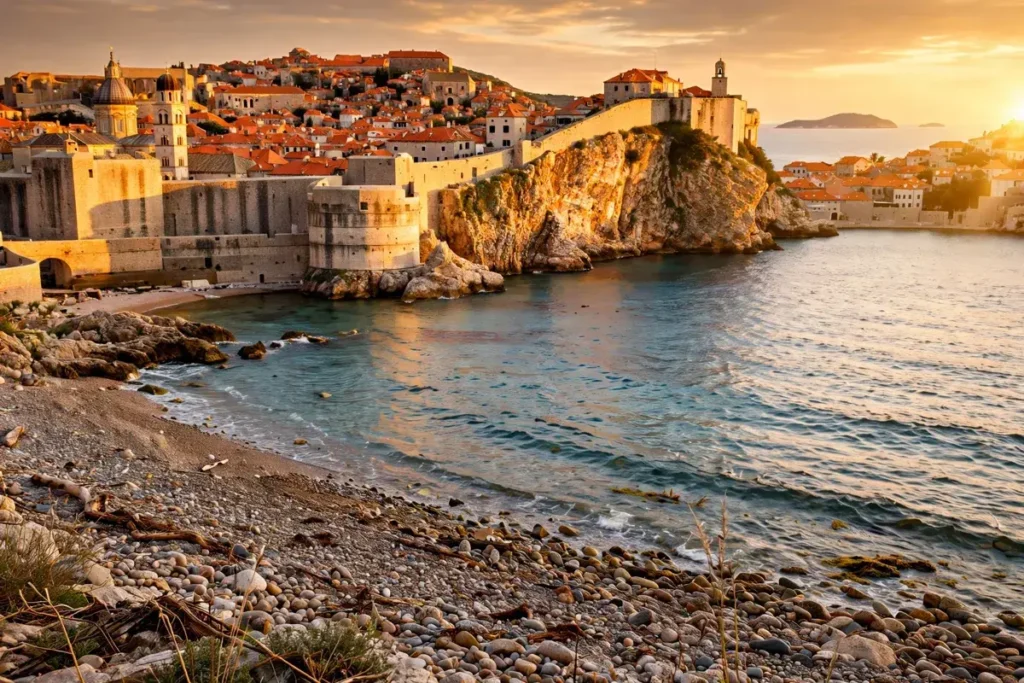
Staying inside the walls means waking up in the city itself. You step out onto Stradun, the main limestone street, and the walls, the harbour, and the main sights are minutes away on foot. Early morning and late evening are the reward, since day visitors leave and the streets quieten.
The trade offs are real. The Old Town is pedestrian only, so taxis cannot drop you at the door and you will carry luggage over stone streets and up steps. Rooms are often smaller than in a resort hotel, some guesthouses have steep stairs and no lift, and it is the noisiest and most expensive part of the city in high season. Choose the Old Town for atmosphere if you pack light. If anyone in your party has limited mobility, a base just outside the walls will usually be more comfortable.
Pile: Just Outside Pile Gate
Pile sits just outside the western gate of the Old Town, and for many first time visitors it is the best compromise in Dubrovnik. You are a few minutes on foot from Stradun and the walls, but you are outside the pedestrian zone, so taxis and buses can reach you and arrivals are far simpler.
Pile works best for a short stay of two or three nights. You can walk to the main sights and return to the Old Town in the evening for dinner, without planning your day around a bus timetable. It is not a beach base, and rooms can still be pricey in peak season, but the convenience is hard to beat.
Ploce: Views and a Short Walk East
Ploce lies to the east of the Old Town, above Banje Beach, and it is the area for views. From here you look back across the walls, the harbour, and the island of Lokrum, and several of Dubrovnik’s best known sea view hotels sit on this stretch of coast.
The walk to the Old Town is short, but parts of Ploce are steep, so check the route before you book. Choose Ploce for a romantic break, or if you want a sea view and afternoons at Banje Beach, the closest beach to the Old Town.
Lapad and Babin Kuk: Beaches and Breathing Room
Lapad and Babin Kuk, to the north west of the Old Town, are Dubrovnik’s beach and resort side. Lapad has a long seafront promenade, pebble beaches, and bathing platforms, while Babin Kuk is quieter and more resort focused, with larger hotels set among pine trees above the water. Both areas feel greener and more spacious than the Old Town.
This is the most practical base for families, with larger rooms, hotel pools, and beaches that are easier for children than the rocky platforms near the Old Town. The cost is distance, since you will take a bus to the Old Town, typically around 10 to 15 minutes. If your trip is mainly about Croatia’s beaches, this is the Dubrovnik base that makes that easy.
Gruz: Value, Ferries and the Port
Gruz is Dubrovnik’s working port district, about 2 to 3 kilometres from the Old Town, and it is where the ferries, the main bus station, and the morning market are. It is less pretty than the Old Town or Ploce, but it is local, practical, and usually better value.
Gruz suits travellers using Dubrovnik as a starting point, since ferries to Korcula, Mljet, and Hvar leave from here. Choose Gruz if value matters most or you are catching a ferry or bus, but not if you want to walk to the walls for dinner every night, since the bus or taxi takes around 10 to 15 minutes in light traffic.
Prices, Crowds and Season: What Changes by Month
Dubrovnik is busiest and most expensive in July and August, when the Old Town is crowded and rooms in and around the walls book up early. If you travel in high season, book early, expect higher prices, and choose your area for quiet at night as well as location by day. Lapad and Babin Kuk are usually calmer in the evenings than the Old Town.
Late spring and early autumn are easier, with warm weather for swimming and sightseeing, fewer crowds, and often lower prices than the summer peak. Winter is quietest and cheapest, but many seasonal hotels close. For a first visit, late spring or early autumn gives the best balance, as our guide to the best season for a Croatia trip explains.
Getting There from the UK and Getting Around
Direct flights from London to Dubrovnik take around 2 hours 35 to 2 hours 45 minutes, and Dubrovnik is one hour ahead of the UK. The airport journey to the Old Town takes around 30 minutes by bus or taxi.
For entry, UK citizens can visit Croatia without a visa for up to 90 days in any 180 day period, counting time spent in other Schengen countries too. Your passport must have been issued less than 10 years before you arrive and remain valid for at least 3 months after you plan to leave. Check GOV.UK travel advice for Croatia before you travel, since entry processes can change. Croatia uses the euro.
You do not need a car for Dubrovnik itself. The Old Town is walkable, buses link Lapad, Babin Kuk, Gruz, and Pile, and boats leave the old harbour for Lokrum. A car is useful only for day trips, and parking near the Old Town is limited and expensive. If you are still deciding when to book flights for the best prices, note that prices rise sharply for the school summer holidays.
Where to Stay by Trip Type
Short first visit, two to three nights: Pile or the Old Town, so every sight is on foot. Romantic break: Ploce for views, or the Old Town for atmosphere. Family holiday: Lapad or Babin Kuk for beaches, space, and larger hotels. Longer stay, four nights or more: Lapad, Babin Kuk, or Gruz, where the pace is slower and the value is better. Island hopping trip: Gruz, close to the ferries and the bus station.
Before you book, ask three questions. Can a taxi or bus reach the door? How steep is the walk back? And is there a lift? Those answers matter more than distance on the map. Also think about room type, since choosing between a villa and a hotel changes how much space and privacy you get.
Frequently Asked Questions
What is the best area to stay in Dubrovnik for first time visitors?
For most first time visitors, Pile or the Old Town works best. Pile is the easier choice if you have luggage or arrive late, while the Old Town is the most atmospheric. Ploce is a good alternative if you want sea views and a short walk to the walls.
Is it better to stay inside or outside Dubrovnik Old Town?
Stay inside the walls if atmosphere and walking to every sight matter most and you pack light. Stay outside the walls, in Pile or Ploce, if you want easier arrivals, a taxi to the door, and a quieter night.
Where should families stay in Dubrovnik?
Lapad and Babin Kuk suit families best, thanks to beaches, promenades, larger hotels, and more space. The Old Town is exciting for a day, but small rooms, stairs, and crowds make it harder work with children.
Where is the cheapest place to stay in Dubrovnik?
Gruz and parts of Lapad usually offer the best value, with lower room prices than the Old Town or Ploce. Travelling outside July and August also lowers prices across the city.
Do I need a car if I stay in Dubrovnik?
No. The Old Town is car free and walkable, buses connect the main areas, and boats serve Lokrum and the islands from Gruz and the old harbour. Hire a car only for day trips outside the city.