

Quick Answer
The best time to visit the Greek islands is late May to June or September to early October. In those months the sea is warm enough to swim, almost everything is open, and you avoid the fierce heat and the biggest crowds of July and August. September is the best month for most UK travellers, with warm seas and prices falling once the schools go back.
Spring in the Greek Islands: April and May
Spring suits travellers who prefer walking, sightseeing and lower prices over swimming. In April, average highs on Santorini reach around 19 degrees, based on 1991 to 2020 climate normals, but the sea is still cool at around 16 degrees around Mykonos. May is when the season properly begins: average highs on Santorini climb to around 23 degrees, the sea warms to about 18 to 19 degrees, and hotels and tavernas open across the islands. It is the best value beach month of the year, although the last week of May coincides with the UK half term, so prices rise briefly.
Early Summer: June, the Sweet Spot
June is one of the best months to visit the Greek islands. Average highs on Santorini reach around 27 to 28 degrees, the sea warms to about 21 to 22 degrees, and the days are the longest of the year. Ferries run on full summer timetables and the islands feel alive without yet feeling overwhelmed. Crowds build through the month, especially on Santorini and Mykonos from mid-June, but the first half of June is still noticeably calmer than July.
Peak Summer: July and August
July and August are the hottest, busiest and most expensive months on the Greek islands. Average highs across the Aegean reach around 33 degrees, with heatwave periods pushing higher, and the sea reaches its warmest at around 24 degrees. Every ferry, hotel and restaurant is open and village festivals run through the summer. For families tied to the school summer holidays, this is the only realistic window.
The trade-offs are real. Santorini and Mykonos are among the most congested destinations in Europe in August, with cruise ships adding thousands of day visitors to the narrow streets of Oia and Fira. Santorini now caps cruise arrivals at 8,000 passengers a day, and cruise passengers pay a levy of up to 20 euros in peak season. The meltemi, a strong northerly wind, blows through the Cyclades in July and August and can make ferry crossings choppy.
Autumn: September and October, the Best of Both Worlds
September is the best single month for most UK adults without school-age children. The sea has had all summer to warm up and sits at around 23 to 24 degrees, average highs on Santorini are still around 27 degrees, and the big school holiday crowds leave in the first week of the month. October stays mild and is the calmest month for sightseeing, with average highs around 23 degrees on Santorini and the sea still swimmable in early October. Some smaller hotels and tavernas start to close from mid-October, and ferry timetables thin out, so it is a better month for a single-island stay than for ambitious island hopping.
Winter: November to March, When the Islands Close Down
Winter is the cheapest time to visit Greece, but it is not really an island season. From November to March, most island hotels and tavernas close, ferry services thin out, and many smaller islands feel almost shuttered. Average highs on Santorini fall to around 14 to 16 degrees in January and February, and the sea drops to around 15 to 16 degrees. Athens stays open all year and is at its best for sightseeing in the cooler months, and Crete keeps enough hotels and restaurants open to work for a quiet winter break. Direct flights from the UK to the islands mostly stop outside the season. Our guide to the best places to visit in November has warmer alternatives for that time of year.
Island by Island: When Each Island Is at Its Best
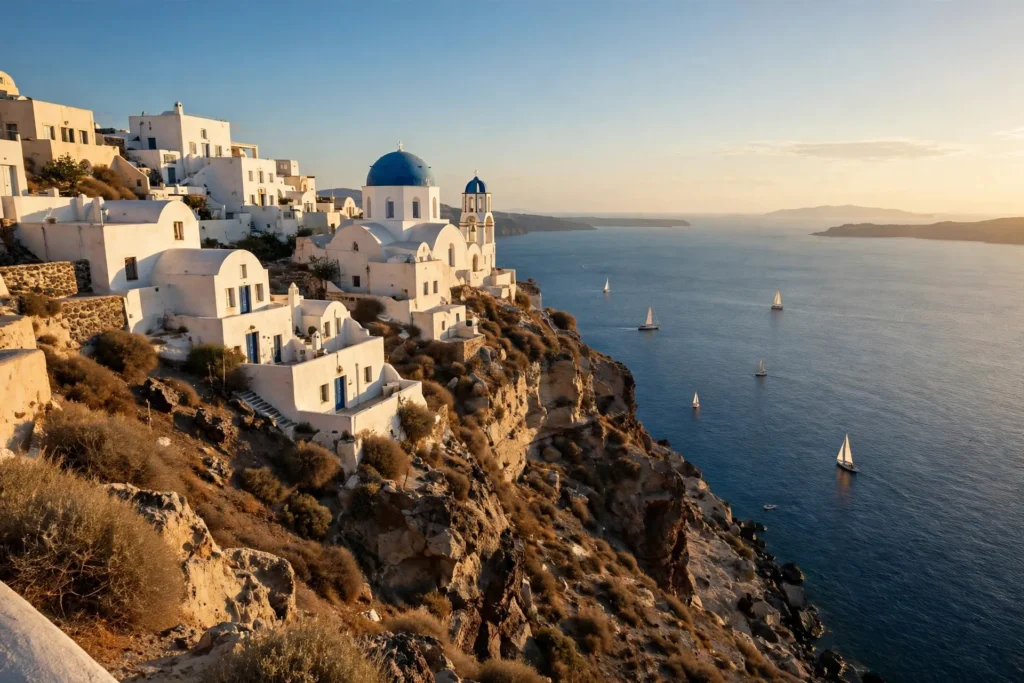
Not every island peaks in the same month. Santorini is at its best in May, June and September, when you can enjoy the caldera views and the Oia sunset without the August crush. Mykonos follows the same pattern, with June and September offering warm days and lively beach clubs at far lower prices than August. Crete is the most forgiving island for timing: it is large enough to absorb the summer crowds and its south coast stays warm into late October. Rhodes is the warmest of the big islands, running one or two degrees warmer than the Cyclades, which makes it a strong choice for May and October. Corfu peaks in June and September, but it cools earlier in autumn and gets more rain than the Aegean islands. The smaller Cyclades, such as Naxos, Paros and Milos, are at their best in June and September. For a similar season-by-season comparison in the western Mediterranean, see our guide to the best time to visit Spain.
Crowds, Prices and When to Book
Greece has one of the sharpest peak-to-shoulder price gaps of any European destination from the UK. Flights to Athens and the islands are cheapest in May and September, often costing less than half the August fare on the same route, and package holiday prices follow the same pattern. July and especially August are the priciest months of the year. For July and August, book flights and accommodation four to six months ahead, and book inter-island ferries as soon as your dates are fixed. For May, June and September, booking two to three months ahead is usually enough, and travelling midweek often saves money. Our guide on when to book flights for the cheapest prices explains how far ahead to book for the best fares.
Getting There From the UK
Direct flights from London to Santorini and Mykonos take around three hours and 45 minutes to four hours, and Crete takes around four hours, with easyJet, British Airways, Jet2 and TUI among the airlines flying the routes. Almost all island routes are seasonal, running roughly from late March to the end of October, with the fullest schedules from May to September. Outside the season, direct flights thin out or stop, and you will usually need to connect through Athens. High-speed ferries connect Piraeus with the Cyclades in two to five hours, and inter-island ferries run frequently from May to October. If you are island hopping, check the ferry timetable before you book flights.
Practical Tips for UK Travellers
UK passport holders can visit Greece visa-free for up to 90 days in any 180-day period. Your passport must have been issued less than ten years before you enter Greece and must be valid for at least three months after the day you leave. Entry rules are changing as new EU border systems come in, so check the current ETIAS rules for UK citizens and GOV.UK travel advice before you travel. Pack for the month you are visiting: bring a light jacket for May and October evenings, and in July and August pack sun protection and plenty of water, and sightsee in the morning or late afternoon. Greek Orthodox Easter often falls on a different weekend to Easter in the UK, so book early if your trip falls over Easter weekend.
Frequently Asked Questions
What is the best month to visit the Greek islands?
September is the best month overall, with average highs around 27 degrees on Santorini, sea temperatures of 23 to 24 degrees, falling prices and far fewer crowds once the schools go back.
When is the sea warm enough to swim in Greece?
The sea around the Cyclades reaches about 18 to 19 degrees in May, 21 to 22 degrees in June, and 23 to 24 degrees in July, August and September. Most people find it comfortable from late May onwards.
Is it worth visiting the Greek islands in October?
Yes, especially in the first half of October. Average highs on Santorini are around 23 degrees, the sea is still warm enough for a swim, prices are low and the islands are quiet. Crete and Rhodes are the safest choices for late October.
How hot does it get in the Greek islands in August?
Average highs across the Aegean reach around 33 degrees in August, with heatwave periods pushing higher, and the sea is around 24 degrees. Santorini and Mykonos are at their busiest and most expensive, so book months ahead and sightsee in the morning.
When are the Greek islands cheapest to visit?
May and September offer the best value for a warm trip, with flights and hotels often costing far less than in July and August. November to March is cheaper still, but most island hotels are closed and direct flights largely stop. For the lowest prices, aim for early May or late September, and travel midweek. Our guide to the best time to visit Croatia shows a similar shoulder-season pattern on the other side of the Adriatic.