
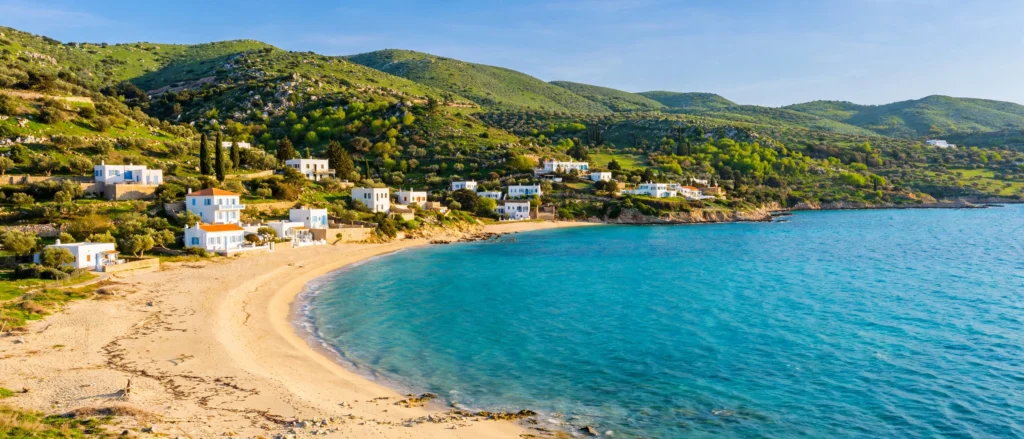

Quick Answer
The best time to visit Cyprus is late April to June, and again in September and October. Daytime highs sit between 22C and 30C, rain is rare, and the sea is warm enough for a swim from May onwards. July and August bring the hottest weather and the biggest crowds, while November to March suits walkers who want low prices.
Cyprus Weather Month by Month
Cyprus has one of the longest summers in the Mediterranean. The figures below are the 1991 to 2020 averages for Larnaca Airport, on the south east coast.
January averages 12.1C with about 81 mm of rain, and highs reach around 17C. March warms to 14.5C, April reaches 17.7C, and May averages 21.9C with highs near 26.5C. June averages 25.6C with barely 2 mm of rain, July averages 27.9C, and August is the hottest month at around 28.4C. September stays warm, October drops to about 21C, November to 17C, and December to 13.9C with 96 mm of rain, the wettest month.
Spring in Cyprus: March to May
Spring is the pick of the year for many UK travellers. March still feels cool, with highs near 19C, but wildflowers cover the hillsides, so it is a fine month for walking in the Akamas Peninsula and the Troodos foothills. April is when the season turns, with highs near 22.5C and rain down to 16 mm for the month. Orthodox Easter often falls in April, so check the date before you book.
May is one of the best single months to visit. Highs average 26.5C and the sea has warmed enough for swimming. Beaches in Ayia Napa and Protaras are open and uncrowded, and ancient sites like Kourion are easy to visit without queuing in fierce heat.
Summer in Cyprus: June to August
June is hot and dry, with highs around 30C and almost no rain. Early June still feels manageable, and it is a good choice for a beach holiday before the school holidays start.
July and August are the hottest months, with daytime highs of 31C to 32C on the coast and higher inland. Humidity stays low, so the heat feels drier than in many Mediterranean resorts, but sightseeing at midday is hard work. Plan ancient sites and walks for the morning, and swim in the late afternoon. August is also the busiest month, so prices peak and the best hotels book up early. If you must travel in August, book well ahead and pick a quieter base such as Paphos.
Autumn in Cyprus: September to November
September is the second sweet spot of the year. The sea is at its warmest after a full summer of sun, daytime highs stay near 30C, and the crowds fall away once UK schools go back. It is the best month for swimmers who want warm water without the August crowds.
October keeps the warmth, with highs around 25C and the sea still pleasant for a swim. It suits a beach holiday at a gentler price, and walkers who want the trails without summer heat. The October half term, usually the last week of the month, brings a short lift in prices. November marks the change of season, with highs near 21C and the first proper rains, but it is still mild enough for lunch outside on a sunny day.
Winter in Cyprus: December to February
Winter in Cyprus is mild by UK standards, with daytime highs of 16C to 17C and plenty of sunny spells. December is the wettest month, with around 96 mm of rain, so pack a waterproof jacket. January and February are cooler and quieter, with nights that can dip to 7C. The sea is too cool for most swimmers, but the Troodos mountains get cold enough for skiing on Mount Olympus, and Nicosia, Limassol, and Larnaca stay lively all year. Outside the Christmas and New Year weeks, winter is the cheapest time to fly.
Crowds: When Cyprus Feels Busiest
Cyprus is busiest from late June to the end of August, when the UK school holidays overlap with the European summer break. Ayia Napa and Protaras fill first, and the most popular beaches can feel packed by midday. Paphos and Limassol spread people out better. The quietest months are January and February. April, May, and October give the best balance. Expect a busy week at Orthodox Easter, and during the UK half terms in February, late May, and October.
Prices: The Cheapest Months to Visit Cyprus
November, January, and February are usually the cheapest months to visit Cyprus, outside school holidays and the Christmas break. Flights from the UK are often at their lowest then, and hotels cut rates to fill rooms. For warm weather at a fair price, the best value windows are late April, May, and early June, then mid September to October. July and August are the dearest months. For a closer look at timing a booking, read our guide to the best time to book flights for the cheapest prices.
Getting There from the UK: Flights and Entry Rules
Flights from the UK to Cyprus take about four and a half to five hours. Most UK travellers fly into Larnaca or Paphos, and both airports have direct flights from London and the regions through the summer.
Entry rules are simple, but they are different from Spain or France. Cyprus is in the EU but it is not part of the Schengen area, so days spent in Cyprus do not count towards your 90 day Schengen limit, and you do not register for the new Entry/Exit System. UK passport holders can visit without a visa for up to 90 days. Your passport must have been issued less than 10 years before the day you arrive, stay valid for at least three months after the day you plan to leave, and have a blank page for stamps. The planned EU travel authorisation, ETIAS, was not yet in operation in November 2026, so nothing extra is needed. Only fly into Larnaca or Paphos, as entering through the north, for example via Ercan Airport, counts as illegal entry. These rules come from GOV.UK travel advice for Cyprus, last updated 14 August 2026. A GHIC card covers medically necessary state healthcare in Cyprus, and it is free from the NHS, but it is no substitute for travel insurance. Cyprus drives on the left, like the UK.
Who Should Visit Cyprus, and When
Beach lovers should go in May, June, September, or October, when the sea is warm and the beaches are not packed. Families tied to the school holidays will find late July and August hot and dear, so look at the first week of the summer break or the October half term. Walkers, cyclists, and history fans get the most from April, May, and October, when the heat stays kind. The Greek Islands run on a similar seasonal pattern, so if you are weighing the two, our guide to the best time to visit the Greek Islands sets out the same choice for that side of the Mediterranean. Winter sun seekers should look at November to March, when prices are low and the days stay mild. Couples who want a quiet break should pick May or October, while anyone chasing the warmest sea should aim for September. If a family beach holiday is the plan, compare the eastern Med with our pick of the best beaches in Greece for families.
Frequently Asked Questions
What is the best month to visit Cyprus?
May and September are the best all round months. May brings highs near 26.5C, warm seas, and low crowds, while September has the warmest sea and highs near 30C. April and October run close behind.
Is Cyprus hot in October?
Yes, October is still warm, with daytime highs around 25C and the sea warm enough to swim in. Evenings cool down, so pack a light layer.
When is the cheapest time to go to Cyprus?
November, January, and February are usually the cheapest months, outside the Christmas break and the February half term. For warm weather at a lower price, try late April, May, or mid September to October.
Can you swim in Cyprus in winter?
Some hardy swimmers do, but most people find the sea too cool from December to March. It is warm enough for a comfortable swim from May to November.
How long is the flight from the UK to Cyprus?
About four and a half to five hours from London. Larnaca and Paphos both have direct flights from the UK in summer, with a thinner timetable in winter.
Do I need a visa for Cyprus?
No, UK passport holders can visit Cyprus without a visa for up to 90 days. Your passport must have been issued less than 10 years before arrival and stay valid for at least three months after you leave. Cyprus is not in the Schengen area, and ETIAS was not yet in operation in November 2026.