

Quick Answer
Two days is the sweet spot for a first trip to York. One day covers the Minster, the Shambles and a stretch of the city walls, but it is a fast day on foot. Two days add JORVIK and the National Railway Museum, plus time to eat. Three days slow the pace and leave room for the smaller museums and quieter streets. Four days let you add a day trip to Castle Howard or Whitby. York ranks among the best UK city breaks for a short stay, because the centre is small and easy to cover on foot.
One Day in York: The Essentials
Start at York Minster when it opens at 9.30am, Monday to Saturday. It is the largest Gothic cathedral in northern Europe. An adult ticket costs £20, or £26 with the Central Tower climb, and children aged 17 and under go free with a paying adult. The tower climb is 275 steps, for ages 8 and over, and needs a timed slot. Allow one and a half to two hours inside. Your ticket is valid for 12 months, so a return visit costs nothing. On Sundays, sightseeing only runs from 12.45pm to 2.30pm.
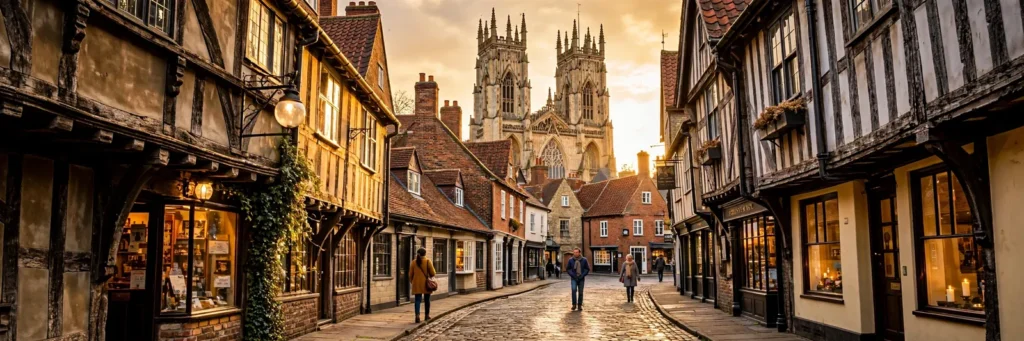
From the Minster, walk to the Shambles, the narrow medieval street of overhanging timber-framed buildings. It is free to wander, and busiest at midday, so go before lunch if you can. Stop at Shambles Market for a quick bite, then climb the city walls at Bootham Bar and walk the short stretch to Monk Bar. The full loop runs about two miles, but this short section gives you the best views of the Minster in under half an hour. Finish the day at Clifford’s Tower for the view over the city at sunset. It costs about £12 booked ahead, or £14 on the day. Finish with an evening ghost walk if you still have energy.
Two Days in York: Add the Museums and the River
Day two starts at JORVIK Viking Centre on Coppergate. Prebooking is essential, because time slots sell out, especially at weekends and in school holidays. The ride takes you through a rebuilt Viking-age street, and the gallery after it holds objects dug up on this very site. Open 10am to 5pm every day, tickets valid for 12 months. Allow one to one and a half hours. York Castle Museum sits a short walk away, with its recreated Victorian street, Kirkgate. Check the museum site for current prices before you go.
Spend the afternoon at the National Railway Museum, a ten-minute walk from the station. Entry is free, it is open 10am to 5pm every day, and last admission is at 4.30pm. Book a free ticket online before you go, because walk-up visitors can face a wait at busy times. The Great Hall holds Mallard, the fastest steam locomotive in the world, plus royal carriages and a Japanese Bullet Train. Allow two to three hours. Walk back into town along the River Ouse as the light fades, then pick a historic pub for dinner.
Three Days in York: A Slower Pace and the Best Streets
Day three is for the York that most day-trippers miss. Start in Museum Gardens, the free riverside gardens behind the Minster, where the ruins of St Mary’s Abbey stand on the lawns. York Art Gallery and the Yorkshire Museum sit in and around the gardens. From there, wander the streets just off the main route: Goodramgate for independent shops, Fossgate for cafes, and Walmgate for the quietest stretch of the walls. Book ahead for afternoon tea at Bettys on St Helen’s Square, because tables go quickly.
Use the afternoon for York’s Chocolate Story, which covers the city’s chocolate makers, from Rowntree to Terry’s, with tastings along the way. If the weather is kind, take a river cruise from King’s Staith, which gives you a different view of the city away from the crowds. A third day also gives you time to climb the Minster tower if you skipped it on day one, since your ticket is still valid.
Four Days in York: Day Trips from the City
By day four you have seen the city properly, and York’s real advantage is what sits within easy reach of it. Castle Howard, about 15 miles north-east of the city, is the grandest day out, with its house, gardens and lakes. Reach it by bus from the city centre, or by car in about half an hour. Whitby is the other classic choice, about one and a half to two hours away by car or train. Its abbey ruins stand above the harbour, and the 199 steps up to St Mary’s Church are worth the climb before fish and chips on the harbour front. The North York Moors sit between the two, and the steam railway from Pickering makes a good day out.
If you would rather stay in the city, use day four to revisit your favourites. The Minster feels different when you are not rushing, and the walls are quiet in the morning. February brings the JORVIK Viking Festival, which ran from 8 to 14 February in 2027. December brings the Christmas market in Parliament Street and St Nicholas Fair. Our guide to Edinburgh by trip length works the same way, if you want to compare the two cities before you choose where to spend your next short break.
How Long Each Main Attraction Takes
Use these times to build your own plan.
| Attraction | Time needed | Adult price |
|---|---|---|
| York Minster | 1.5 to 2 hours | £20, or £26 with the tower |
| City walls walk | 1.5 to 2 hours | Free |
| The Shambles | 1 hour | Free |
| JORVIK Viking Centre | 1 to 1.5 hours | Paid, book ahead, prices vary |
| National Railway Museum | 2 to 3 hours | Free |
| Clifford’s Tower | 1 hour | About £12 booked ahead |
| York Castle Museum | 1.5 to 2 hours | Paid, check the museum site |
| Museum Gardens | 1 hour | Free |
If the Minster, JORVIK and Clifford’s Tower are all on your list, compare the York Pass before you book. It covers around 20 attractions, and it can save money if you visit several paid sights in a single day. Work out the total first, because the pass only pays off if you pack the day full.
What to Book Before You Go
Book JORVIK first. It is the one attraction that genuinely sells out, because every visitor needs a timed slot. Book the Minster tower climb next, since places are limited and run at set times. Book your train early too. London King’s Cross to York takes about two hours, the fastest trains about one hour 46 minutes, and Advance singles start at £28.80 when you book two weeks ahead. Book accommodation early for December weekends and February half term, when the market and the Viking Festival fill the city. Our hotel vs B and B guide will help you choose between a hotel and a bed and breakfast.
Practical Tips for Every Trip Length
Stay inside the city walls for a one or two day trip, so you can walk everywhere and drop your bags between stops. York is compact and mostly flat, but the streets are cobbled and slippery when wet, so wear shoes with grip. Do not try to park in the city centre. Use one of the Park and Ride sites around the ring road and take the bus in. York gets rain through the year, so pack a waterproof layer. May, June and September offer the best balance of daylight and smaller crowds. If you are travelling with children, protect the Railway Museum and JORVIK in your plan, because both can fill a morning on their own.
Frequently Asked Questions
Is one day enough for York?
One day covers the highlights, the Minster, the Shambles, a stretch of the walls and Clifford’s Tower, but you will miss the museums and the quieter streets. Book the Minster for its 9.30am opening, so you start ahead of the crowds.
How many days do you need in York for a first visit?
Two days. Day one covers the Minster, the Shambles and the walls, and day two adds JORVIK and the National Railway Museum. Three days is better if you like to wander.
What should I book in advance in York?
Book JORVIK first, because its timed slots sell out. Book the Minster tower climb next, and book your train early for the cheapest Advance fares. In December or February half term, book your hotel early too.
Is York walkable?
Yes. Most visitors cover the main sights on foot, because the centre is small and mostly flat. The walls and the Minster tower need steps, and the cobbles can be slippery when wet, so wear good shoes.
Can you do York as a day trip from London?
Yes. Direct trains from London King’s Cross take about two hours, the fastest about one hour 46 minutes. Catch an early train, aim for the Minster at opening time, and take a late train back.